
Animal Directory Featured species in the planned Desert Trails habitat
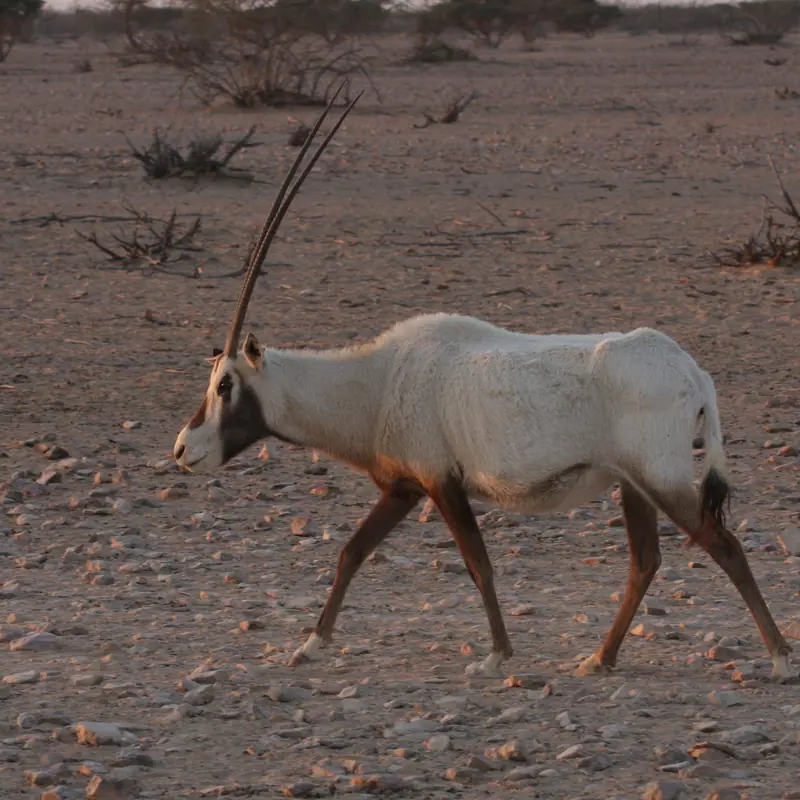
Photo: Christoph Moning CC BY 4.0 Wikimedia Commons
Arabian Oryx
Oryx leucoryx
Young Explorer Notes
Three quick things to know about the Arabian Oryx.
- Superpower
**Brought back from extinction in the wild.** Declared Extinct in the Wild in 1972 after the last individual was shot…
- Home
Sandy paths, cacti, and desert sun (with plenty of shade).
- How to help
Friends who need our help
Vulnerable means they could disappear if we do not protect their homes.
Fun facts for everyone
- **Brought back from extinction in the wild.** Declared Extinct in the Wild in 1972 after the last individual was shot, then reintroduced from captive herds beginning in 1982 — IUCN downlisted the species to Vulnerable in 2011.
- The brilliant white coat reflects desert sun; legs and face are darker to absorb warmth in cold desert dawns, an inverse countershading rare in mammals.
- Can detect rainfall from tens of kilometres away and travel directly toward fresh forage and water — a navigation feat researchers still don't fully understand.
- Both sexes carry near-identical straight, ringed horns up to 75 cm long; seen in profile, the two horns merge into one — a likely origin of the unicorn legend.
- Long believed to be the inspiration for the Arabian peninsula's "white antelope of paradise" folk imagery; today serves as the national animal of Oman, the UAE, Bahrain, Qatar, and Jordan.
From the master plan
The Arabian Oryx is staged across the open Sahara Plain at the northern edge of Desert Trails — the largest single sightline in the zone. The exhibit deliberately frames the oryx as the desert’s emblem of recovery, doubling as a narrative anchor for Desert Trails’ “Adapt” pillar.
IUCN status sourced from the Arabian Oryx assessment (IUCN SSC Antelope Specialist Group, 2017) on the IUCN Red List —
Oryx leucoryxwas downlisted from Extinct in the Wild to Endangered in 1986, and again to Vulnerable in 2011 — the first species ever recovered from EW to VU.
Find them in
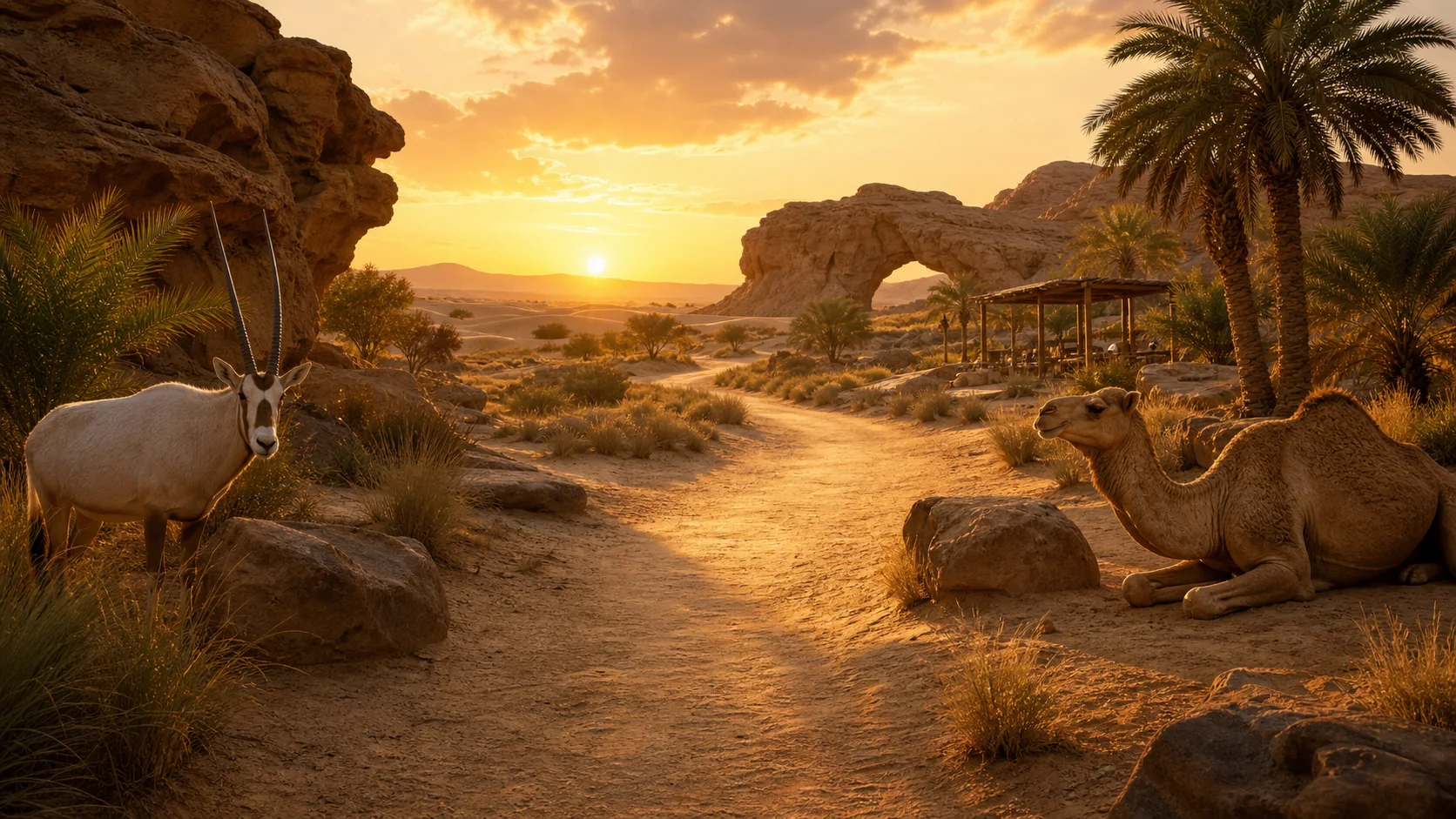
Desert Trails
A sun-baked journey through dunes, canyons and resilient desert life
Visit Desert Trails