
Animal Directory Featured species in the planned Reptile & Nocturnal House habitat
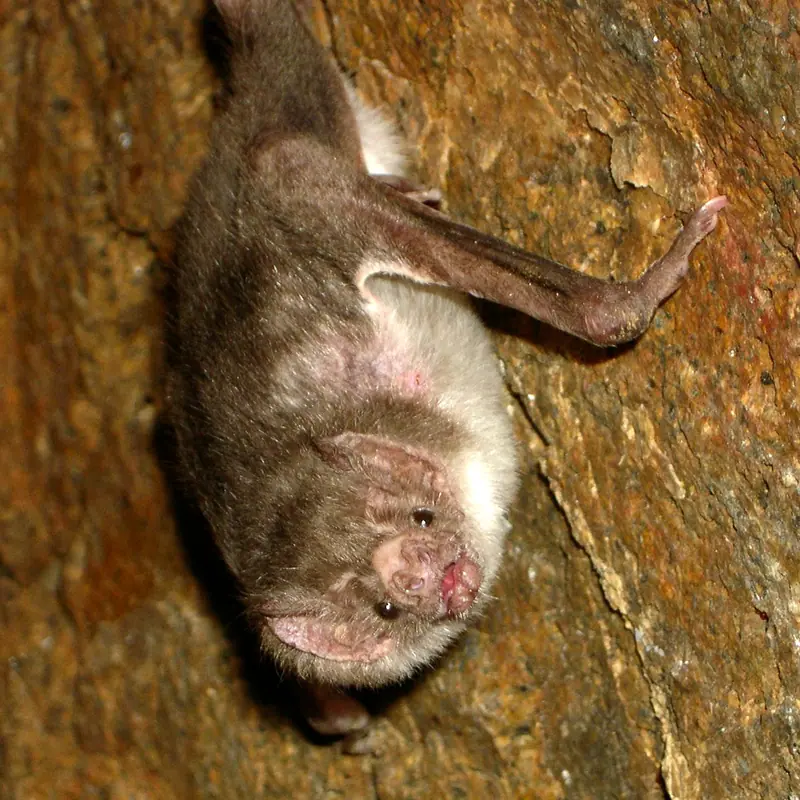
Photo: Acatenazzi at English Wikipedia CC BY-SA 3.0 Wikimedia Commons
Common Vampire Bat
Desmodus rotundus
Young Explorer Notes
Three quick things to know about the Common Vampire Bat.
- Superpower
One of only three mammal species on Earth that feed entirely on blood — and the only one that targets warm-blooded ma…
- Home
A cool, moonlit world for reptiles and night hunters.
- How to help
Doing great in the wild!
Scientists say this species is safe for now. We still learn about them to keep it that way.
Fun facts for everyone
- One of only three mammal species on Earth that feed entirely on blood — and the only one that targets warm-blooded mammals.
- Heat-sensing pits in the nose detect veins under the skin of sleeping cattle, tapirs, and pigs to within fractions of a millimetre.
- Bites are so shallow and the saliva so anaesthetic that the host almost never wakes; the bat laps blood for around 20 minutes.
- Will share regurgitated blood meals with roost-mates who failed to feed — a rare case of true food-sharing reciprocity in non-primates.
- IUCN lists the species as Least Concern with a stable population across Mexico, Central America, and northern South America.
From the master plan
The Common Vampire Bat is the planned Reptile & Nocturnal House’s counter-intuitive teaching star — kept in the Bat Flight Room behind reverse-cycle lighting so guests visit during the bats’ “night.” The exhibit re-frames a creature usually cast as horror as a small, surprisingly social mammal that genuinely shares food with friends.
IUCN status sourced from the Common Vampire Bat (Desmodus rotundus) assessment (Barquez et al., 2015) on the IUCN Red List — listed as Least Concern with a stable population trend.
Find them in
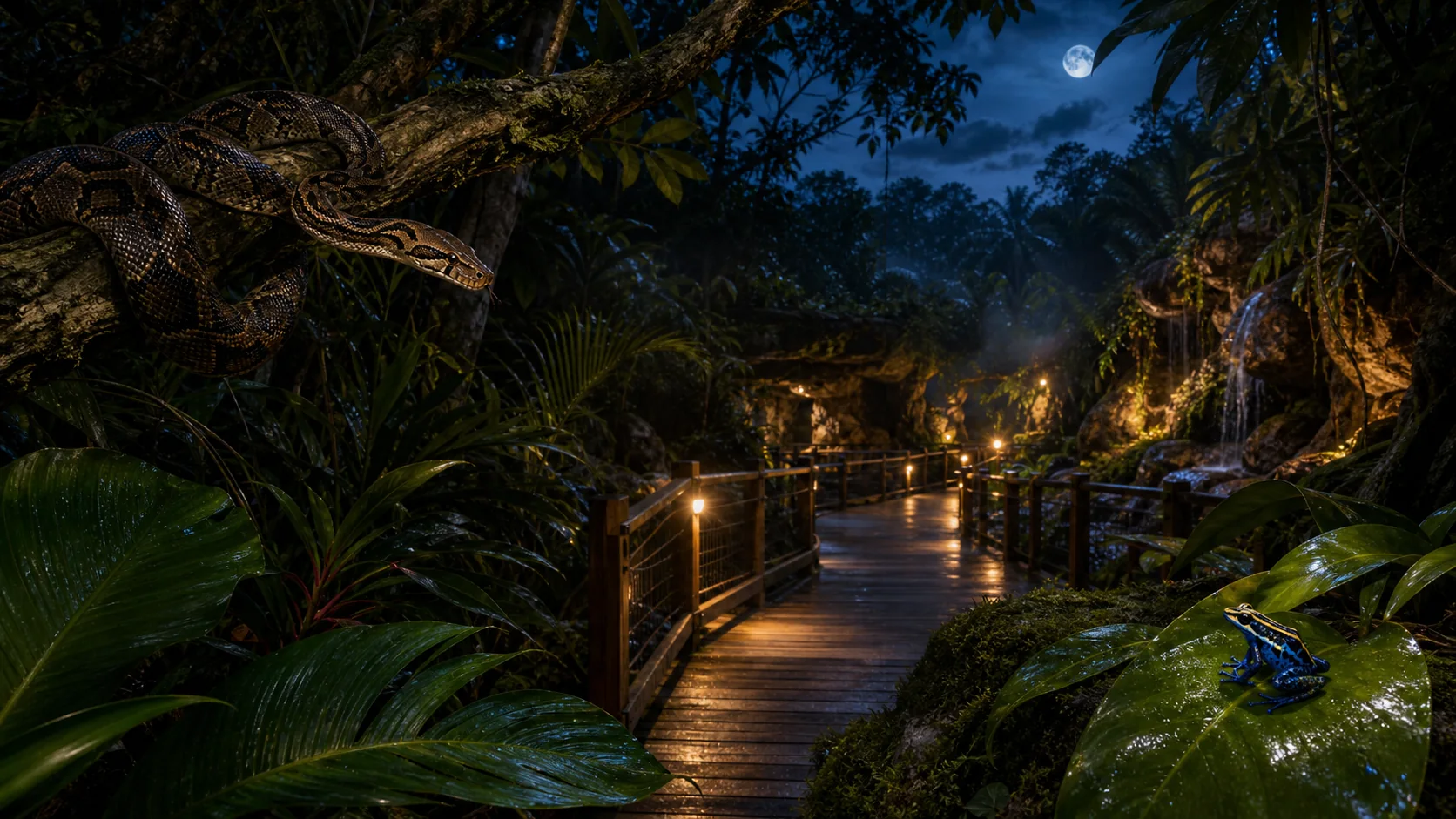
Reptile & Nocturnal House
A mysterious indoor world of scales, stealth and after-dark discovery
Visit Reptile & Nocturnal House