
Animal Directory Featured species in the planned Entrance Plaza habitat
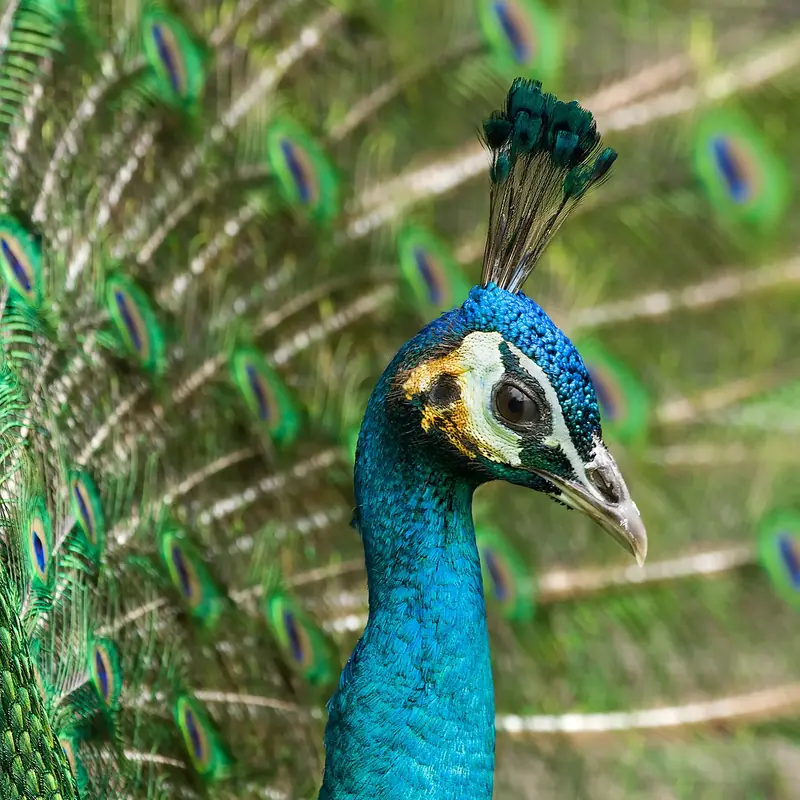
Photo: This picture was realized by Richard Bartz by using a Canon EF 70-300mm f/4-5.6 IS USM Lens CC BY-SA 2.5 Wikimedia Commons
Indian Peafowl
Pavo cristatus
Young Explorer Notes
Three quick things to know about the Indian Peafowl.
- Superpower
The male's iridescent "tail" is not a tail at all — it's an upper-tail covert train of more than 200 elongated feathe…
- Home
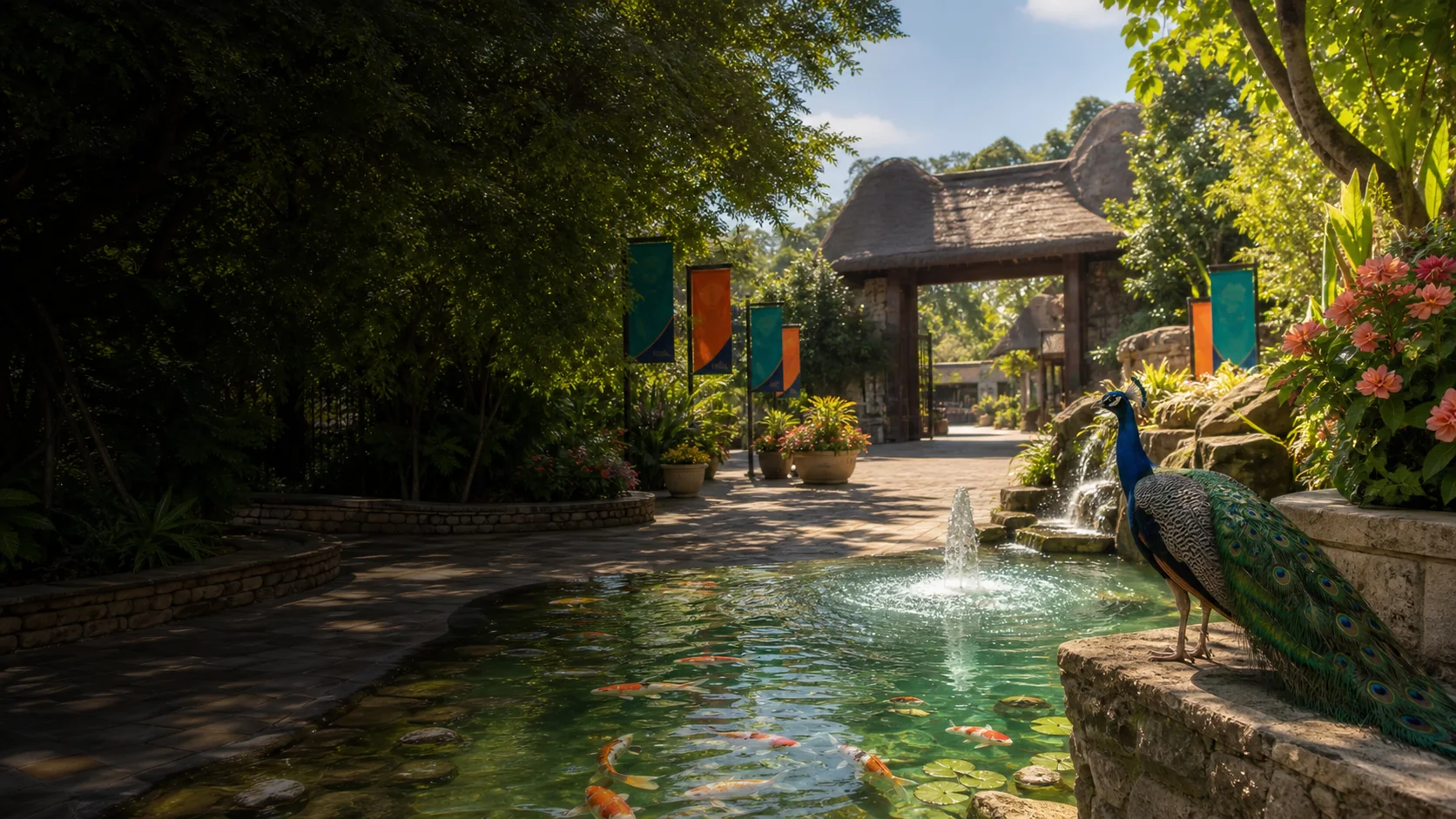
A sunny welcome garden with fountains and friendly birds.
- How to help
Doing great in the wild!
Scientists say this species is safe for now. We still learn about them to keep it that way.
Fun facts for everyone
- The male's iridescent "tail" is not a tail at all — it's an upper-tail covert train of more than 200 elongated feathers, raised by the much shorter true tail beneath it.
- Each train-feather "eye" (ocellus) is a structural-colour effect — microscopic crystalline lattices, not pigment — which is why peacocks shimmer between blue, green, and bronze as guests walk past.
- Peafowl evolved as ground-foragers and roost in tall trees at night; the Entrance Plaza's free-range arrival garden plays directly to that natural behaviour.
- A male's call is a loud, almost human "may-awe" carrying over a kilometre — historically used by Indian villages and forest rangers as a tiger alarm.
- Despite the spectacle of the train, females (peahens) do the choosing — research shows they select mates based on the symmetry and number of eyespots.
From the master plan
The Indian Peafowl is the planned Entrance Plaza ambassador species — a free-roaming flock displays around the central fountain and orientation gardens, setting the tone for every arriving guest. The males’ raised trains are timed for late-morning and golden-hour photo moments under the ornate arrival gateway.
IUCN status sourced from the Indian Peafowl (Pavo cristatus) assessment (BirdLife International, 2016) on the IUCN Red List — listed as Least Concern with a stable population trend.
Find them in