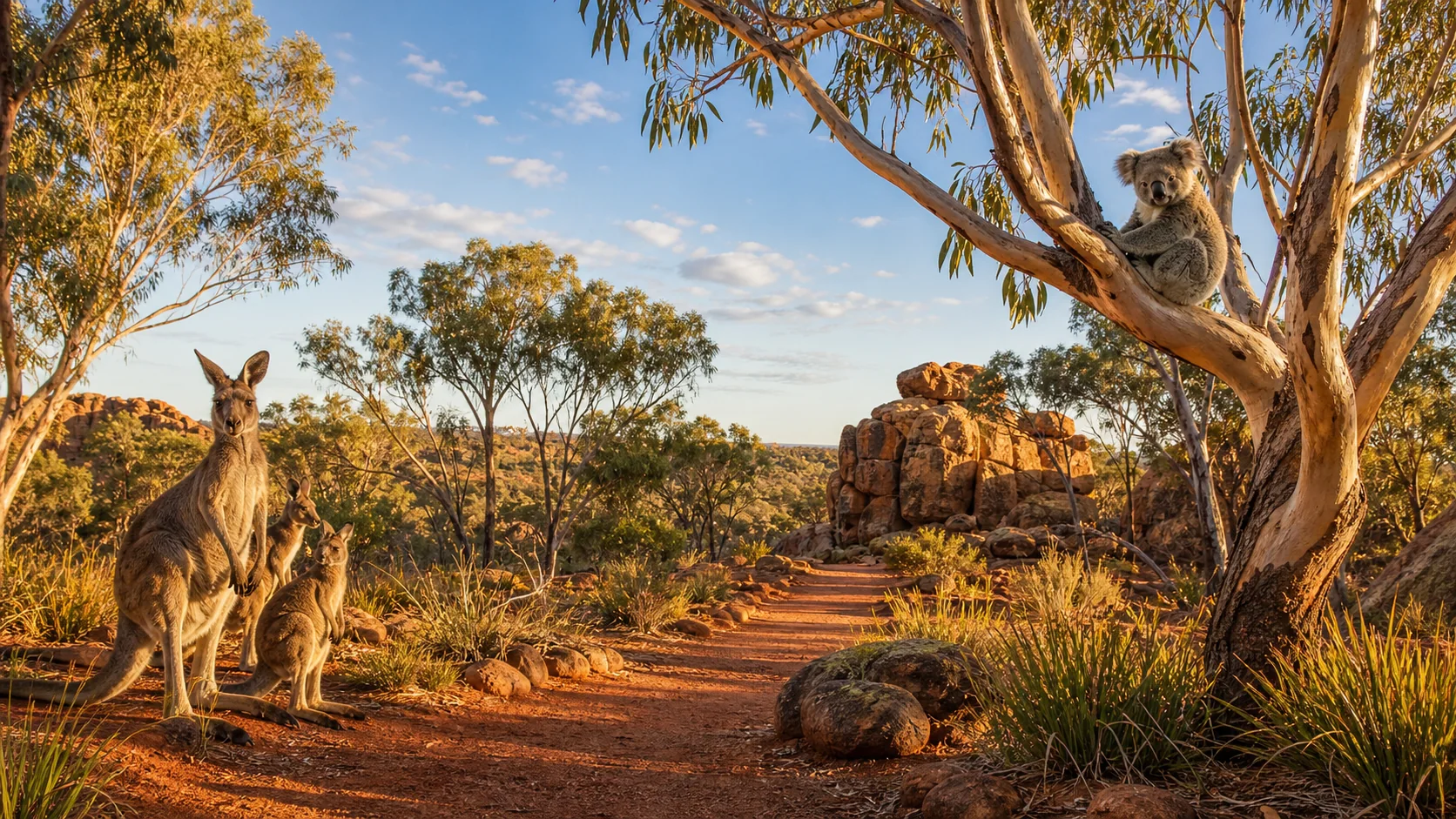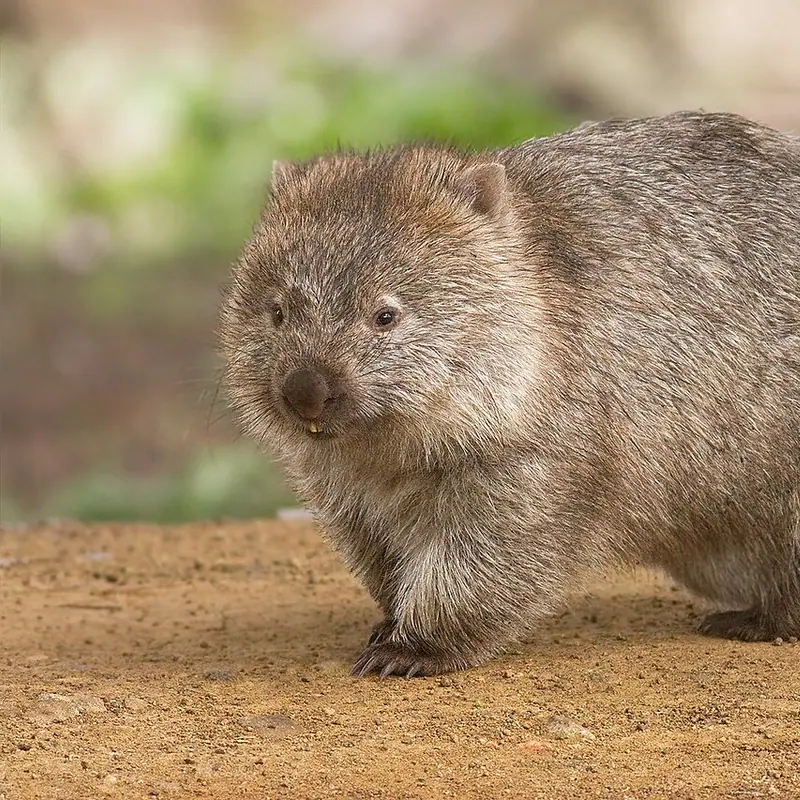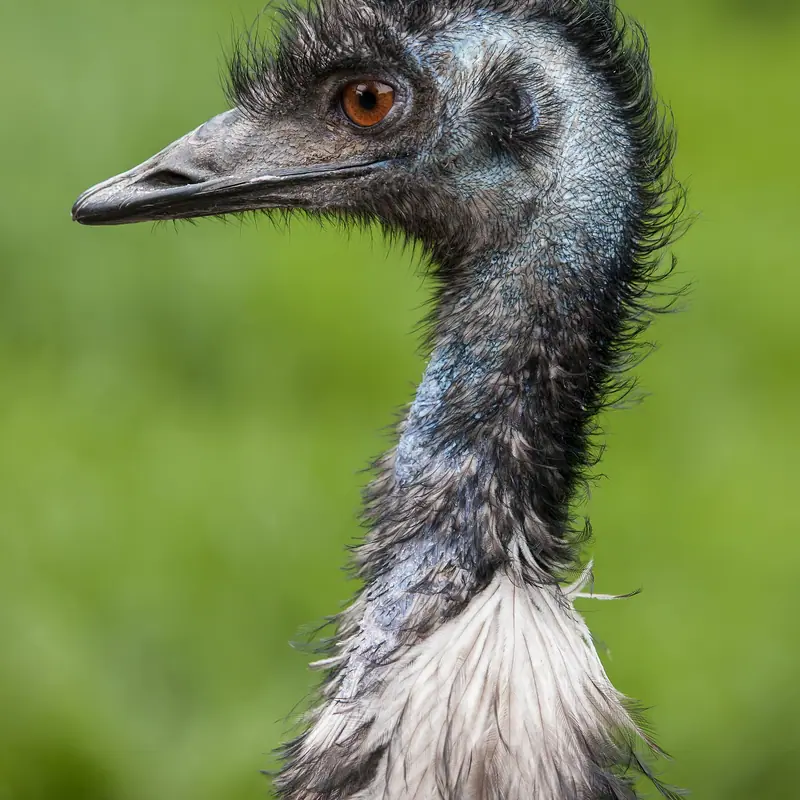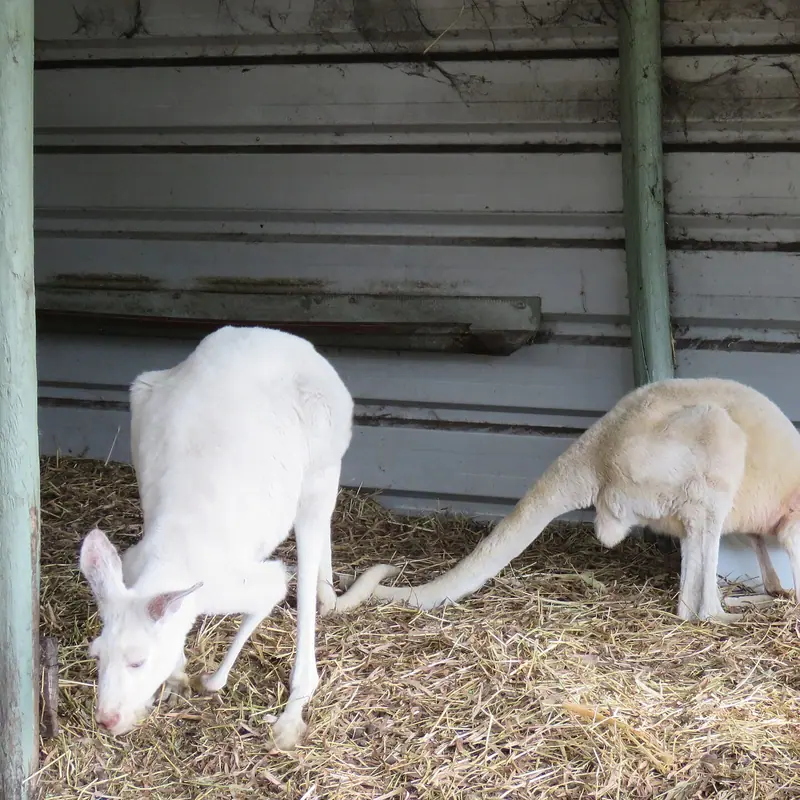

Animal Directory Featured species in the planned Australian Outback habitat
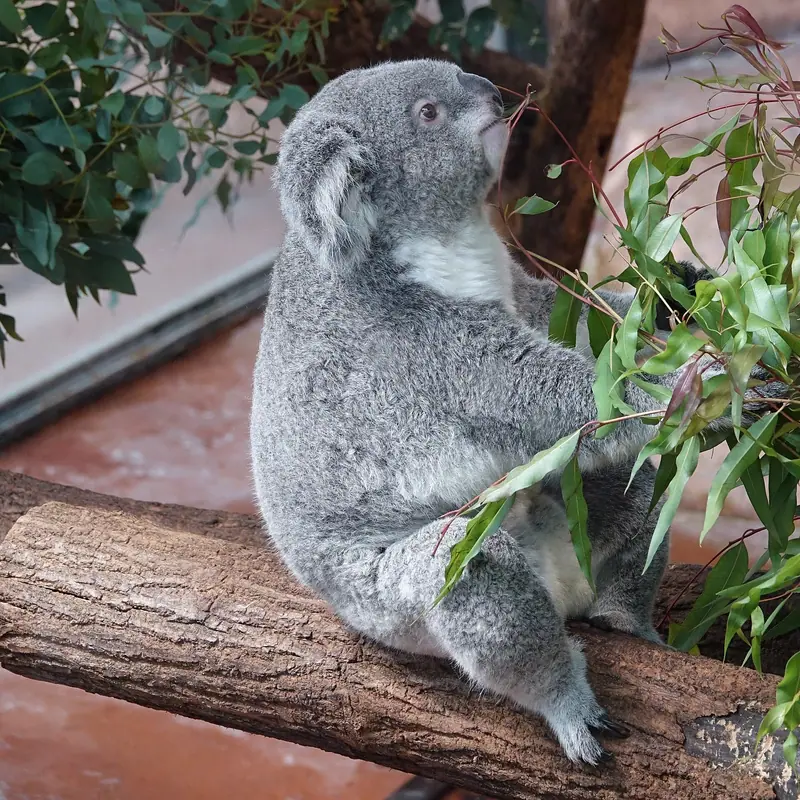
Photo: Gzen92 CC BY-SA 4.0 Wikimedia Commons
Koala
Phascolarctos cinereus
Young Explorer Notes
Three quick things to know about the Koala.
- Superpower
Sleeps 18-22 hours a day.
- Home
Red earth, open bush, and sunny Australian trails.
- How to help
Friends who need our help
Vulnerable means they could disappear if we do not protect their homes.
Fun facts for everyone
- Sleeps 18-22 hours a day. Eucalyptus leaves are toxic, fibrous, and very low in energy, so the koala minimises every activity except chewing.
- Has fingerprints almost indistinguishable from a human's — even under a microscope — despite being a marsupial separated from primates by more than 100 million years of evolution.
- Selects among ~50 eucalypt species and can detect the chemical balance of an individual tree before climbing it; juveniles inherit a starter gut microbiome by eating their mother's "pap".
- Despite the "koala bear" nickname they are not bears — their closest living relative is the wombat.
- Listed as **Vulnerable** by IUCN; the eastern Australian population was further uplisted to Endangered under Australian federal law in 2022 after bushfires and disease.
From the master plan
The Koala anchors the Koala Photo Area along the central walkway of Australian Outback. The exhibit’s manna and swamp gum plantings let guests see koalas browse natural foliage at eye level — most of the time, asleep in the fork of a chosen tree.
IUCN status sourced from the Koala assessment (Woinarski & Burbidge, 2016) on the IUCN Red List —
Phascolarctos cinereuslisted as Vulnerable with a decreasing population trend.
Find them in