
Animal Directory Featured species in the planned Botanical Garden habitat
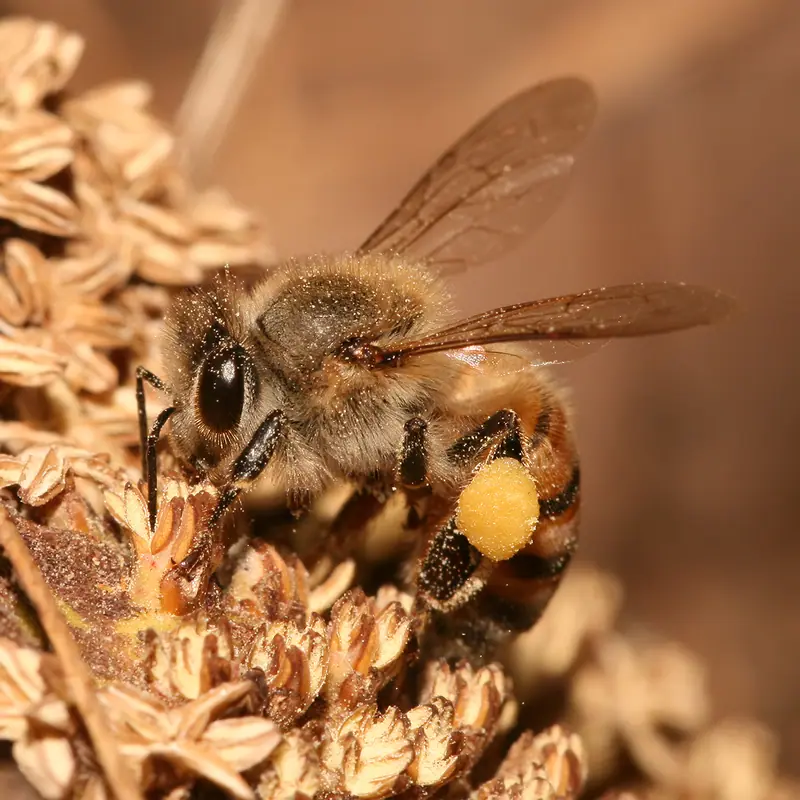
Photo: Muhammad Mahdi Karim GFDL 1.2 Wikimedia Commons
Western Honey Bee
Apis mellifera
Young Explorer Notes
Three quick things to know about the Western Honey Bee.
- Superpower
A single hive contains 20,000-80,000 bees and produces roughly 25-30 kg of surplus honey per year — beyond what the c…
- Home
Flower paths, greenhouses, and quiet garden rooms.
- How to help
Doing great in the wild!
Scientists say this species is safe for now. We still learn about them to keep it that way.
Fun facts for everyone
- A single hive contains 20,000-80,000 bees and produces roughly 25-30 kg of surplus honey per year — beyond what the colony itself needs to overwinter.
- Communicates the bearing and distance to good forage through the "waggle dance" — a figure-eight on the comb whose angle relative to gravity maps the direction to fly relative to the sun.
- Can visit up to 2,000 flowers in a single day; the honey one bee produces in its 6-week summer lifetime adds up to about 1/12 of a teaspoon.
- Globally responsible for pollinating one in three bites of food humans eat, alongside thousands of wild bee species that do most of the unrecognised work.
- **Garden visitor**, not a resident — Botanical Garden is planted for pollinators, and the honey bees that arrive from local hives are wild guests, free to come and go.
From the master plan
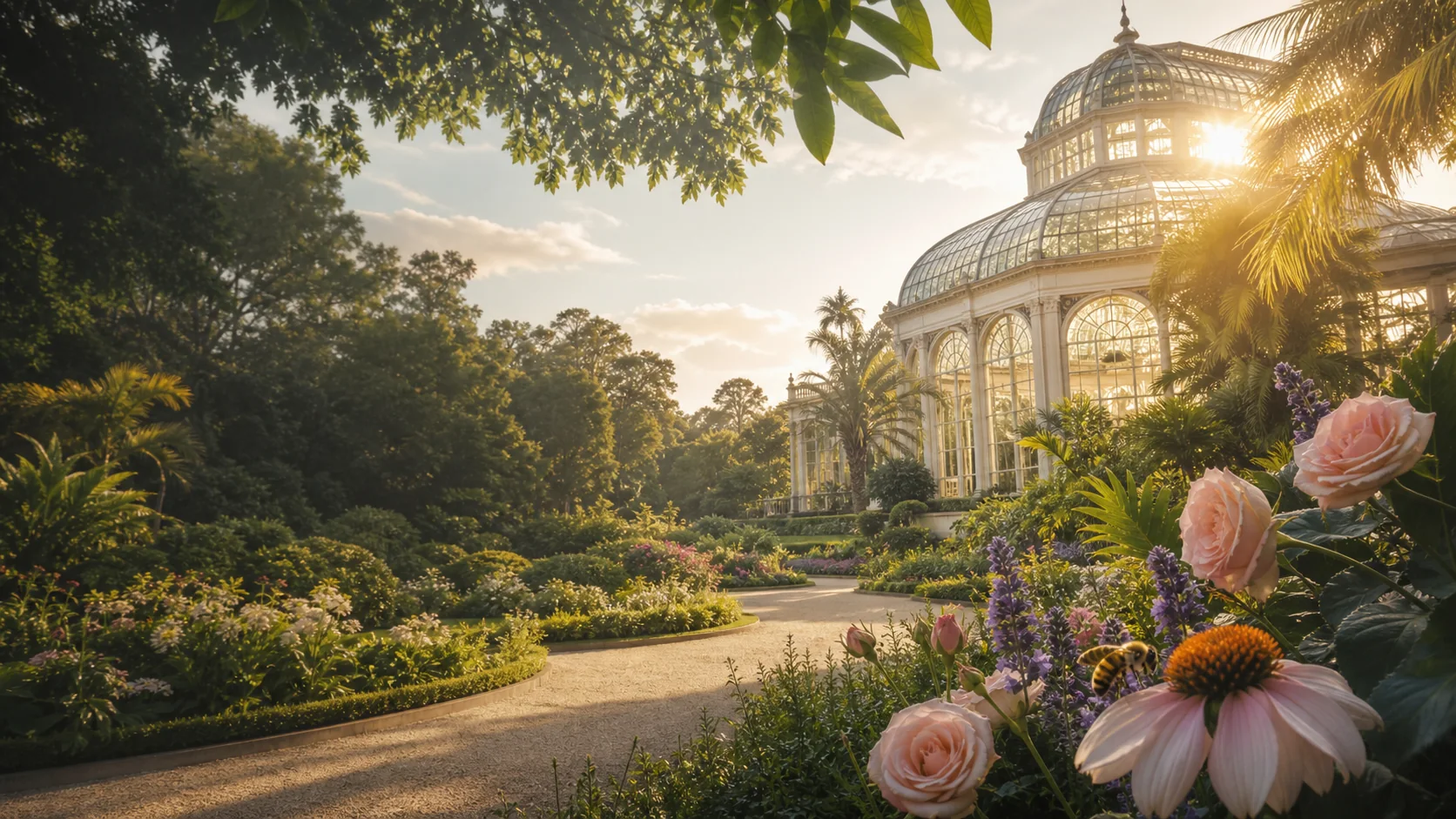
The Botanical Garden has no captive fauna by design — it is a quiet, restorative zone built around greenhouses, floral paths, fountains, and seasonal colour. What it does host is a constant traffic of wild pollinators. The Western Honey Bee is the most recognisable of these visitors: drawn in by sequential bloom plantings selected to provide nectar across the whole season.
IUCN treats
Apis melliferaas Data Deficient at the species level due to taxonomic complexity across subspecies, but the species is globally abundant and not threatened with extinction. We list it as Least Concern for the directory’s purposes; the conservation conversation that matters is the broader decline of native wild pollinators, which Botanical Garden’s planting palette is designed to support.
Find them in