

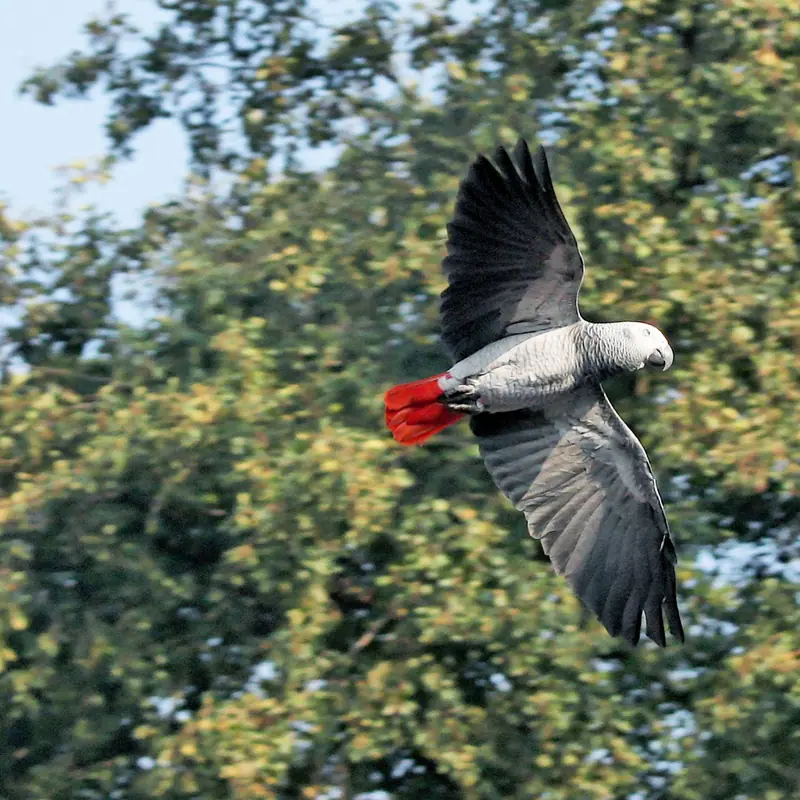
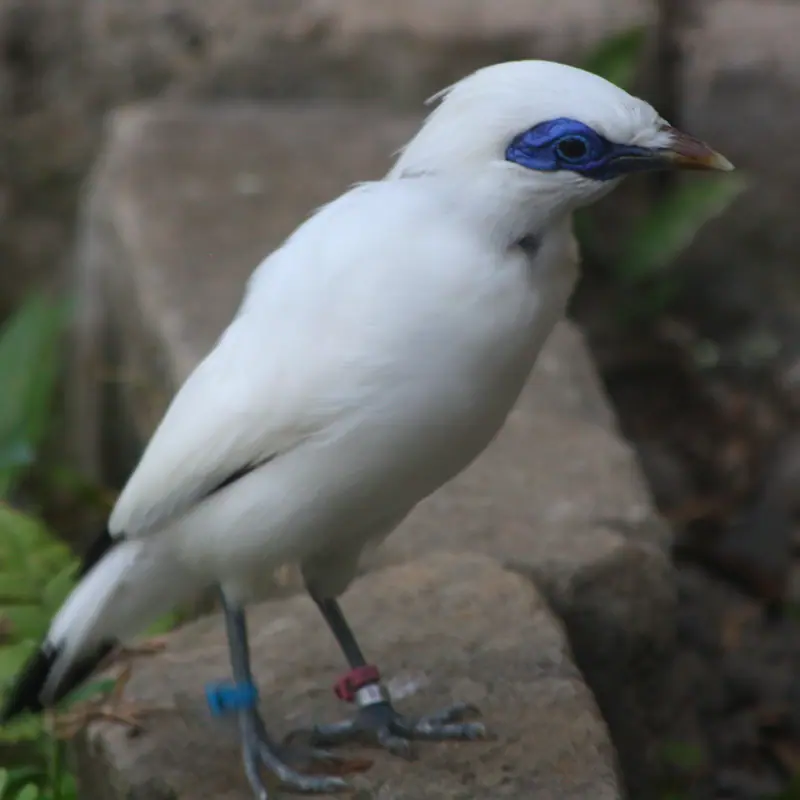
Signature species
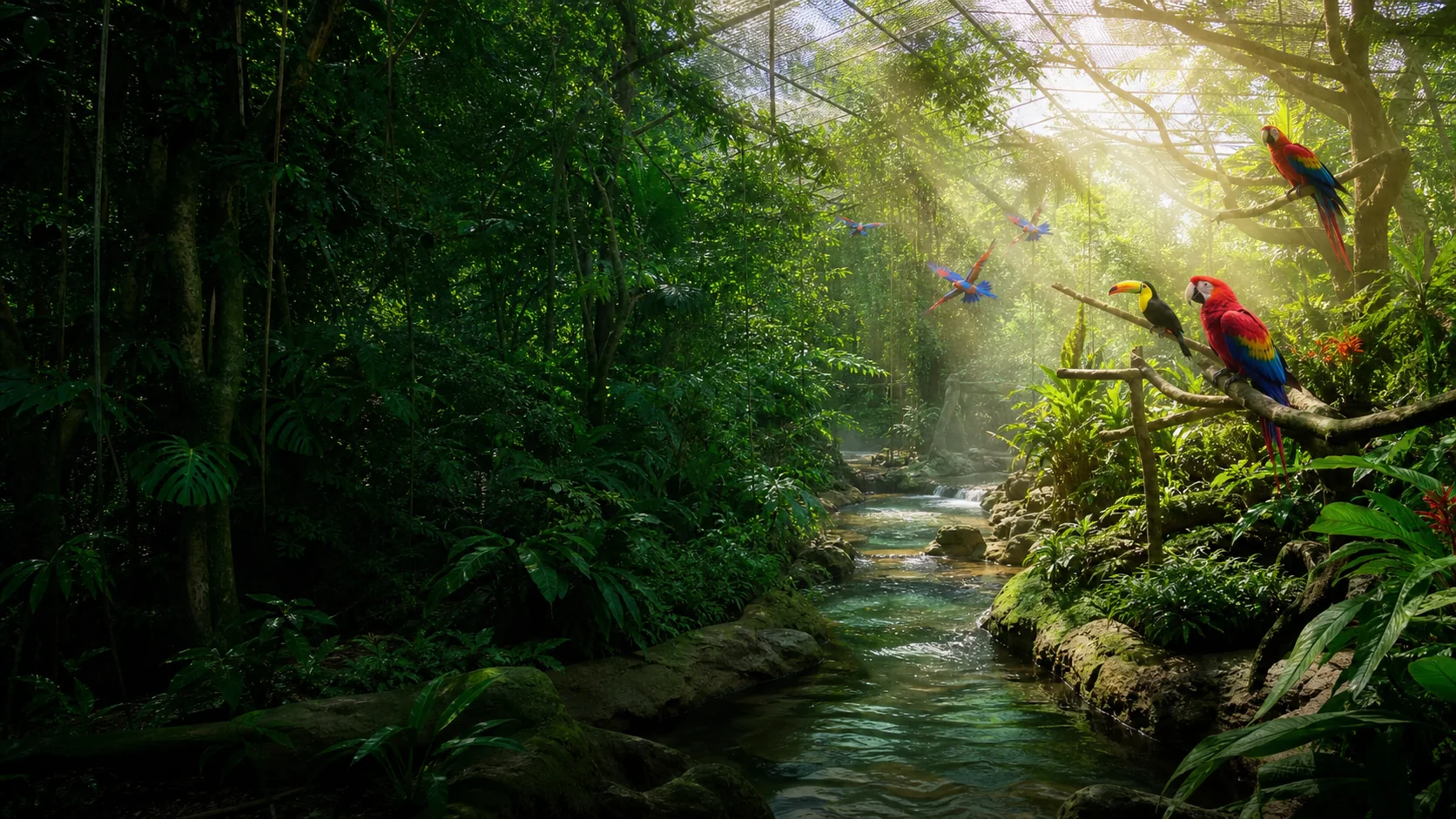
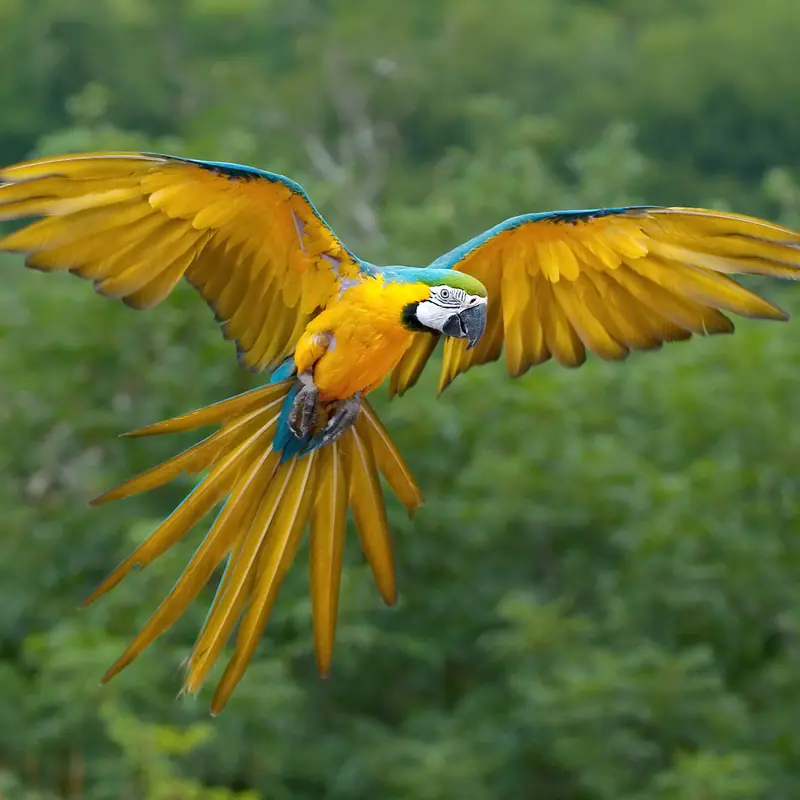
- macaws
- cockatoos
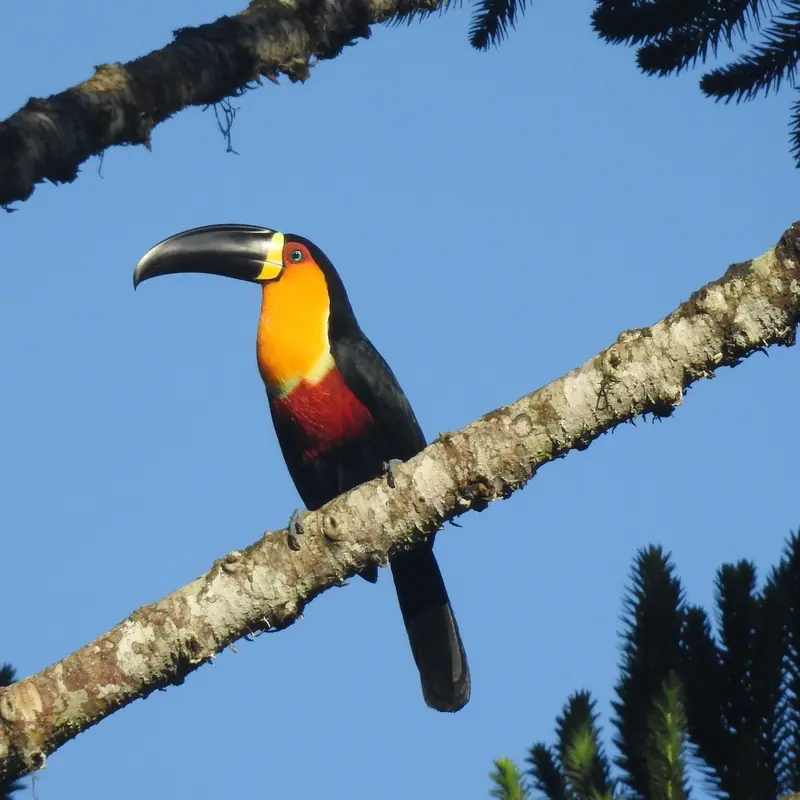
- toucans
- lorikeets
- hornbills
- flamingos
Guest experience
- walk-through aviary with birds free-flying overhead
- domed central viewing chamber with multiple sightlines
- sound and movement on every side, all the way around
- feeding decks where lorikeets land on offered nectar cups
- shaded pond level where flamingos and waterfowl gather
Role in the zoo
A vibrant, social zone with the park's highest repeat-visit appeal — every visit looks different because the cast is in constant motion overhead.
Three pillars
01
Flock
02
Wonder
03
Connect
Points of interest
-
Main Dome Entrance
Air-locked double-door entry to the free-flight habitat, with keeper checks to keep residents safely inside.
-
Lorikeet Feeding Deck
Open platform where guests offer nectar cups and lorikeets land on hands and shoulders during scheduled feedings.
-
Macaw Perches
Cluster of high naturalistic perches where the resident macaw flock socializes — the loudest and most colorful corner of the zone.
-
Toucan Canopy
Mid-level canopy planting designed for toucans and large fruit-eaters, with elevated viewing from the walkway.
-
Cockatoo Roost
Quiet recess set aside for cockatoo enrichment and rest periods, screened from the main flow.
-
Hornbill Cliffs
Sculpted faux-rock cliff face replicating hornbill nesting habitat, with viewing windows at multiple heights.
-
Flamingo Pond
Lower-level pond habitat for the flamingo flock and small waterfowl, shaded by overhanging palms.
-
Songbird Garden
Layered planting of native flowering shrubs, home to smaller passerines and a constant background chorus.
-
Elevated Walkway
Suspended viewing loop at canopy height, putting guests eye-level with the birds in the upper third of the dome.
-
Aviary Cafe & Exit
Air-locked exit into a small cafe with windows back into the dome — a last lingering look before the next zone.
Highlights
- Free-flight design means guests share the same airspace as the birds — there is no glass between you
- Aviaries encourage natural behavior, flight exercise, and social interaction among birds
- Engineered for high repeat visits — the soundscape and motion change hour to hour
From the master plan
A whole zone overhead
Most zones at Grand Wildlife stage their wildlife at eye level. The Aviary stages it everywhere at once — above, around, and occasionally landing right on you. The dome is sized to feel like a small piece of tropical forest floor with a quarter-mile of airspace pressed up against the glass, and the residents use every cubic foot of it.
Designed around three guest moments
- Flock — gather in shared spaces full of sound, color, and life. The central dome is intentionally one room, not a corridor; the social density of the bird flocks reads as a single living spectacle.
- Wonder — be surprised at every turn by motion overhead, every turn of the walkway frames a different layer of the canopy, and the lorikeet feeding deck delivers contact moments most guests will remember as the highlight of their day.
- Connect — feed, observe, and experience life among the birds — keepers are visible on every level, narrating behavior in real time and showing guests how to spot the small things the noise tends to hide.
Why this zone earns the most return visits
Every other habitat in the park is staged for one or two flagship sightings. The Aviary is staged so that every walk through is a different walk through — the macaws are louder some mornings, the toucans hide some afternoons, the flamingos cluster differently with the light. Repeat visitors come back not because they missed something, but because nothing is ever exactly the same.