
Animal Directory Featured species in the planned Australian Outback habitat
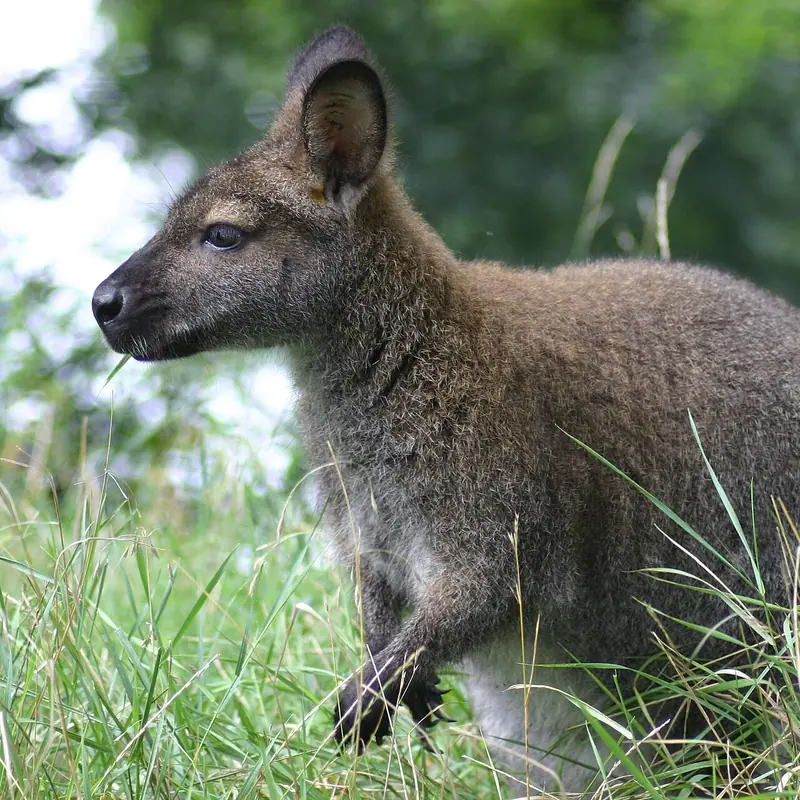
Photo: Grendelkhan CC BY-SA 3.0 Wikimedia Commons
Red-necked Wallaby
Notamacropus rufogriseus
Young Explorer Notes
Three quick things to know about the Red-necked Wallaby.
- Superpower
Named for the rusty-red wash across the shoulders and back of the neck — a clean field-mark even at distance.
- Home
Red earth, open bush, and sunny Australian trails.
- How to help
Doing great in the wild!
Scientists say this species is safe for now. We still learn about them to keep it that way.
Fun facts for everyone
- Named for the rusty-red wash across the shoulders and back of the neck — a clean field-mark even at distance.
- Smaller and more agile than the Red Kangaroo; adults reach about 80 cm at the shoulder and 20 kg, well suited to the scrubby outback edge habitats they prefer.
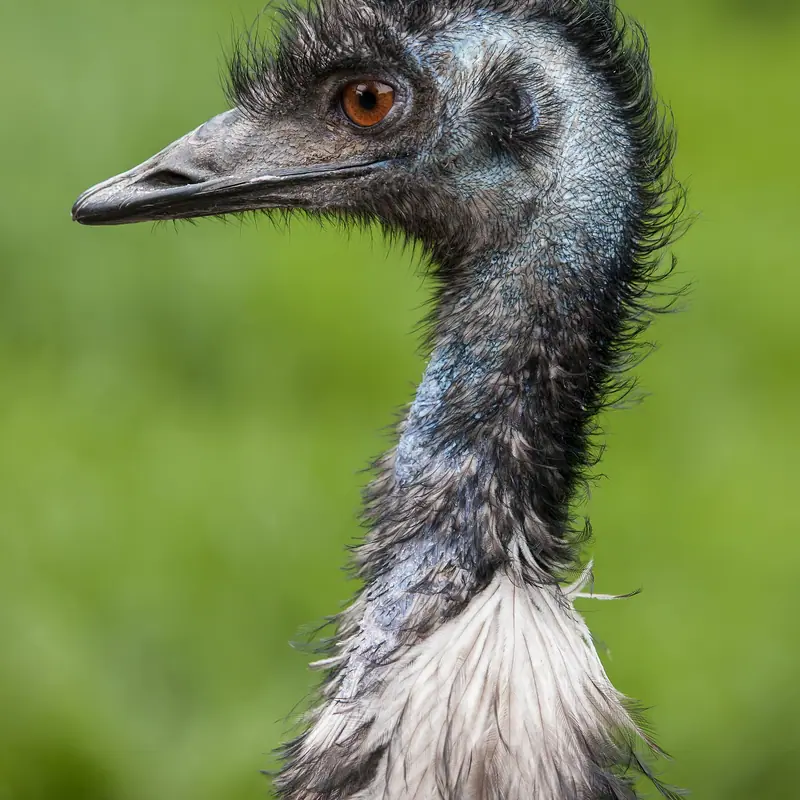
- Mostly solitary, but tolerates loose feeding groups — the right ratio of space to forage allows the species to live calmly alongside emus in the same paddock.
- Established a feral breeding population in the Peak District of England after escapees from a 1940s private collection thrived in the temperate climate.
- IUCN listed as **Least Concern**; population trend is stable across south-eastern Australia and Tasmania.
From the master plan
The Red-necked Wallaby shares the Ranger Talk Station paddock with emus, giving the outback zone a softer, family-paced encounter than the Red Kangaroo mob nearby. The exhibit was sized to support a calm mixed-species group, the same way these species share scrubland in eastern Australia.
IUCN status sourced from the Red-necked Wallaby assessment (Burbidge & Woinarski, 2016) on the IUCN Red List —
Notamacropus rufogriseuslisted as Least Concern.
Find them in